Lean, Regular and Fat FIRE: What Each Style Costs
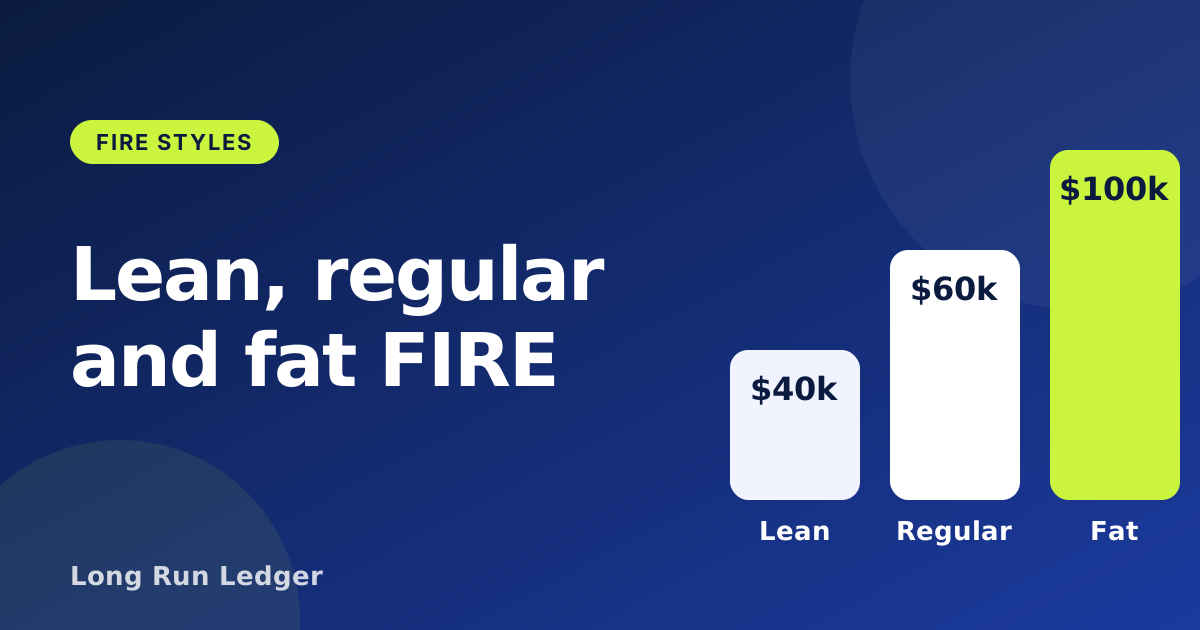
FIRE stands for financial independence, retire early. Lean, regular and fat FIRE aren’t official categories. They’re community shorthand for how much you plan to spend each year, and the formula is the same for all three: FIRE number = yearly spending ÷ withdrawal rate.
Try your own spending. Enter it in the FIRE number calculator to see your target and the age you could reach it.
What each style needs
| Style | Yearly spending (example) | Portfolio at a 4% rate |
|---|---|---|
| Lean FIRE | $40,000 | $1,000,000 |
| Regular FIRE | $60,000 | $1,500,000 |
| Fat FIRE | $100,000 | $2,500,000 |
The dollar amounts are examples, not official lines. Where lean ends and fat begins depends on where you live and how many people you support.
Lean FIRE
A low-spending retirement, with careful budgeting and often a low-cost area. It needs the smallest portfolio, but there’s less room for surprises. Rising healthcare costs or a big repair can make a tight budget harder to keep.
Regular FIRE
A middle path with room for travel and some extras, without a luxury budget. For many people this is the realistic target.
Fat FIRE
A comfortable or high-spending retirement. It takes a much larger portfolio, so it usually means more years of saving or a higher income along the way.
Things that change your number
- Health insurance. Medicare doesn’t start until 65, so budget for coverage before then.
- Taxes. Withdrawals from pre-tax accounts are taxed as income. Roth conversions can help you plan this.
- Social Security. It can lower the portfolio you need later, but it doesn’t help in the early years.
- Withdrawal rate. A longer retirement usually calls for a lower rate than 4%. See the 4% rule explained.
- Part-time income. It shrinks the target. See Barista FIRE.
How to choose
Track your real spending for a few months, then price what you’d keep and what you’d cut. A number based on your actual life is more useful than a label.