Roth IRA for Kids: Custodial Roth IRA Rules and How to Open
A Roth IRA for a child is a custodial Roth IRA: an adult manages the account until the child reaches adulthood. It is one of the longest runway investments there is, because the money can grow tax-free for decades.
The key rule: a child can only contribute as much as they earned that year, up to the IRA limit.
The rules
- No minimum age, but the child needs a Social Security number and earned income (taxable compensation) for the year.
- Contribution limit: the lesser of the child’s compensation or the annual IRA limit, which is $7,500 for 2026. A child who earned $3,500 can contribute up to $3,500.
- Anyone can put the money in. A parent or grandparent can fund the account, as long as the total stays within the child’s earnings. The contribution may count toward the giver’s gift tax annual exclusion.
- Custodian until adulthood. The account must be custodial until the age of majority, which is 18 or 21 depending on the state. The money then belongs to the child.
- The same IRA limit is shared. It applies to all of the child’s traditional and Roth IRAs combined.
What counts as earned income
Wages from a job and self-employment income, such as babysitting, lawn mowing, tutoring or selling products, can count. Allowance and pay for ordinary household chores generally do not. Pay for work for a parent’s business must be reasonable for the work done. Keep records such as pay stubs, payment-app history or a log of jobs, so you can show the contribution is supported.
Net self-employment earnings of $400 or more are subject to self-employment tax. If a parent’s business pays the child, how the pay is reported depends on the type of business, so ask a tax professional.
Why it can be powerful
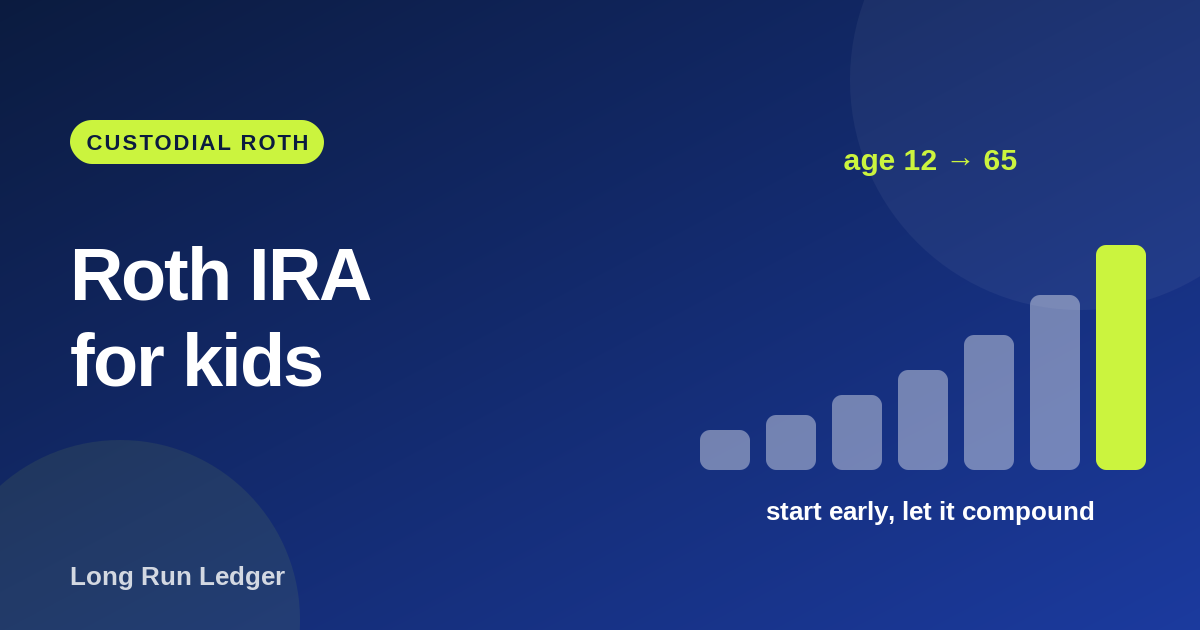
A one-time $2,000 contribution at age 12 growing at a hypothetical 7% a year would be worth about $72,172 by age 65, before inflation. That is the power of compounding over 53 years, and none of it is taxed if the withdrawals are qualified. Returns vary and are not guaranteed.
Access to the money
Contributions can be withdrawn at any time without tax or penalty, but earnings are taxed and penalized before 59½ unless an exception applies. The point is to let it grow. See the Roth five-year rule and the early-withdrawal exceptions.
How to open one
- Confirm the child has earned income and keep records.
- Pick a brokerage that offers custodial Roth IRAs. Many large ones do, usually with no account minimum.
- Open the account in the child’s name with you as custodian, using the child’s Social Security number.
- Fund it by the tax filing deadline of the next year (April 15, 2027 for 2026).
- Choose simple, low-cost investments. See mutual funds vs. ETFs.
The same steps work for adults: see how to open a Roth IRA. The limits are in the Roth IRA contribution limit guide.