When to Claim Social Security: 62, Full Retirement Age or 70?
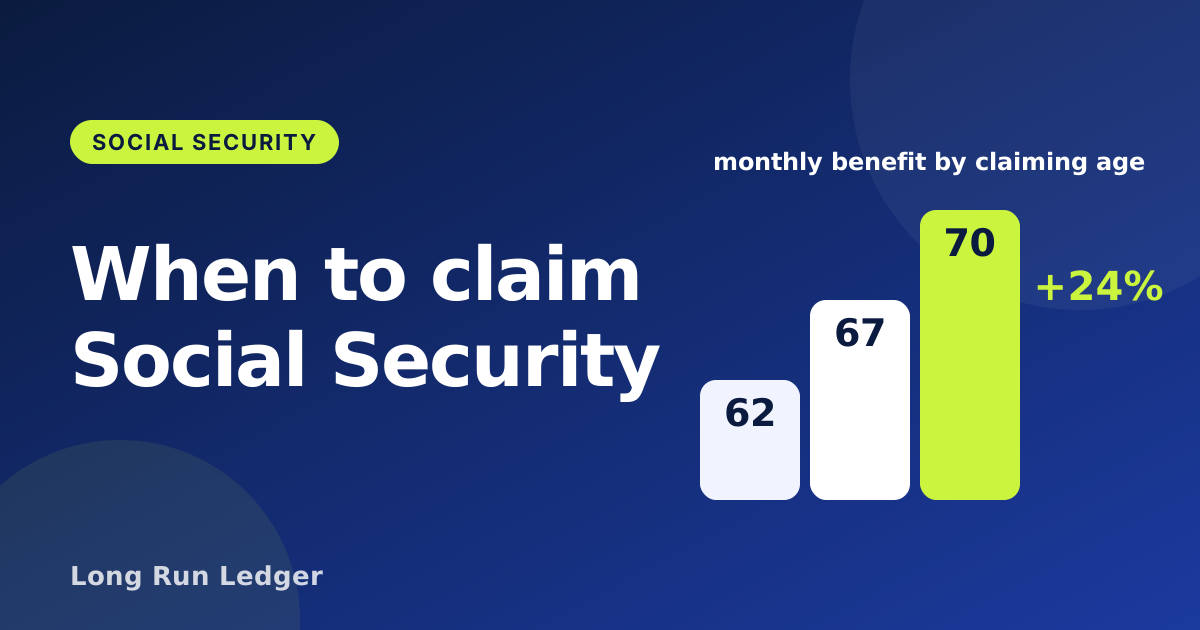
You can start Social Security retirement benefits as early as 62, but the amount depends on when you claim. Your monthly benefit is set for life, apart from yearly cost-of-living adjustments, so the choice matters.
Plan the whole picture. Use the retirement calculator to enter your expected benefit and see how long your savings last.
How much the age changes your benefit
For anyone born in 1960 or later, full retirement age is 67. Compared with your benefit at 67:
| Claim at | Share of your full benefit |
|---|---|
| 62 | 70% |
| 63 | 75% |
| 64 | 80% |
| 65 | 86.7% |
| 66 | 93.3% |
| 67 (full retirement age) | 100% |
| 68 | 108% |
| 69 | 116% |
| 70 | 124% |
An example
Say your full benefit at 67 is $2,000 a month. At 62 you’d get about $1,400, and at 70 about $2,480. That’s $1,080 a month between the earliest and latest choices, for the rest of your life.
The break-even idea
Waiting means collecting fewer checks in exchange for larger ones. The break-even age, where waiting pays off in total dollars, is typically in the late 70s to early 80s depending on the ages compared. If you expect to live past it, waiting tends to come out ahead. If your health or family history suggests otherwise, claiming earlier may make sense.
Other things to weigh
- Spouses and survivors. The higher earner’s delay increases the survivor benefit, which can matter for a spouse who outlives them.
- Working while claiming early. Before full retirement age, an earnings test can temporarily withhold benefits if you earn above a yearly limit.
- Taxes. Up to 85% of your benefit can be taxable depending on your income.
- Other savings. If you can cover spending from your portfolio for a few years, delaying is a way to buy more lifetime income.
Check your personal estimates and the current rules at ssa.gov. For the other ages that matter, see the retirement age in the USA, and for your target number see how much you need to retire.