Retirement guides
Plain-language explanations with worked examples. Each one links to the calculator that does the math for you.
 How Much Do I Need to Retire? A Simple Way to Find Your NumberHow much you need to retire depends on your spending. Use the 25x rule, subtract Social Security, and see worked examples and savings benchmarks.Read guide
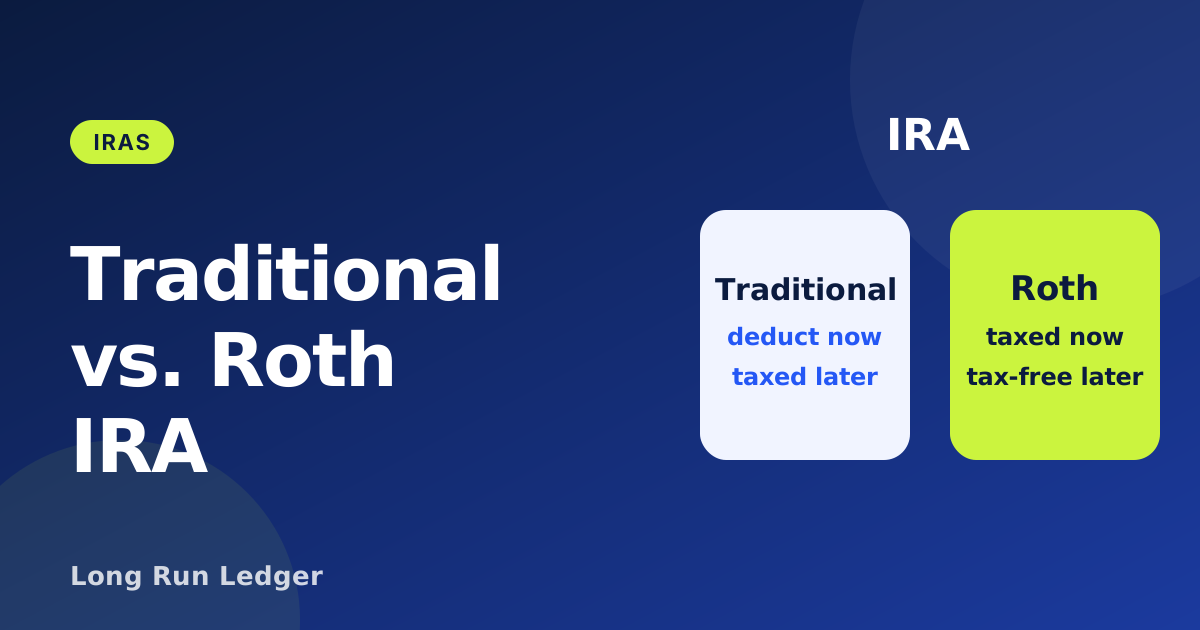 Traditional IRA vs. Roth IRA: Which One Is Right for You?Traditional IRA or Roth IRA? Compare taxes, income limits, withdrawals and required distributions, and see which fits your situation.Read guide
 When to Claim Social Security: 62, Full Retirement Age or 70?Claiming Social Security at 62 cuts your benefit, and waiting until 70 raises it. See the percentages, an example, and what to weigh.Read guide
 Marginal vs. Effective Tax Rate: What’s the Difference?Your marginal rate applies to your next dollar, and your effective rate is your average. See the difference with a worked 2026 example.Read guide
 2026 and 2027 Federal Income Tax Brackets and Standard DeductionsThe 2026 and 2027 federal income tax brackets and standard deductions for single, married filing jointly and head of household filers.Read guide
 How to Start Investing for Retirement: A Beginner’s PlanNew to investing? Follow this order: employer match, emergency fund, IRA, low-cost index funds, and automatic contributions. Includes fees explained.Read guide
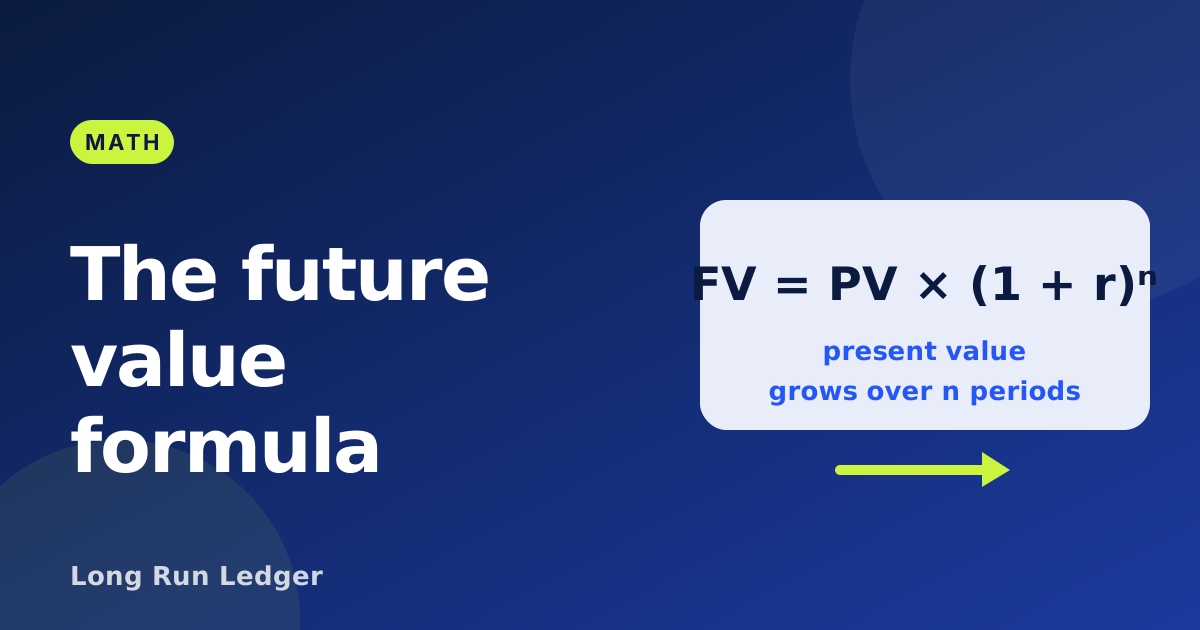 The Future Value Formula, With Worked ExamplesLearn the future value formula for a lump sum and for regular contributions, with worked examples you can check in the calculator.Read guide
 The 4% Rule, Explained: How Much Can You Withdraw in Retirement?The 4% rule says you can withdraw 4% of your portfolio in year one, then adjust for inflation. Learn where it came from, an example, and its limits.Read guide
 What Is the Retirement Age in the USA? Every Key Age From 59½ to 75There is no single retirement age in the US. These are the ages that matter: 59½, 62, 65, 67, 70, 73 and 75, and what each one changes.Read guide
 Roth Conversion Ladder: How Early Retirees Access Their MoneyA Roth conversion ladder moves pre-tax money into a Roth in low-tax years so you can withdraw it penalty-free before 59½. See how it works.Read guide
 The Roth Five-Year Rule, Explained SimplyThe Roth five-year rule decides when earnings come out tax-free and when a conversion avoids the 10% penalty. Learn the two clocks and examples.Read guide
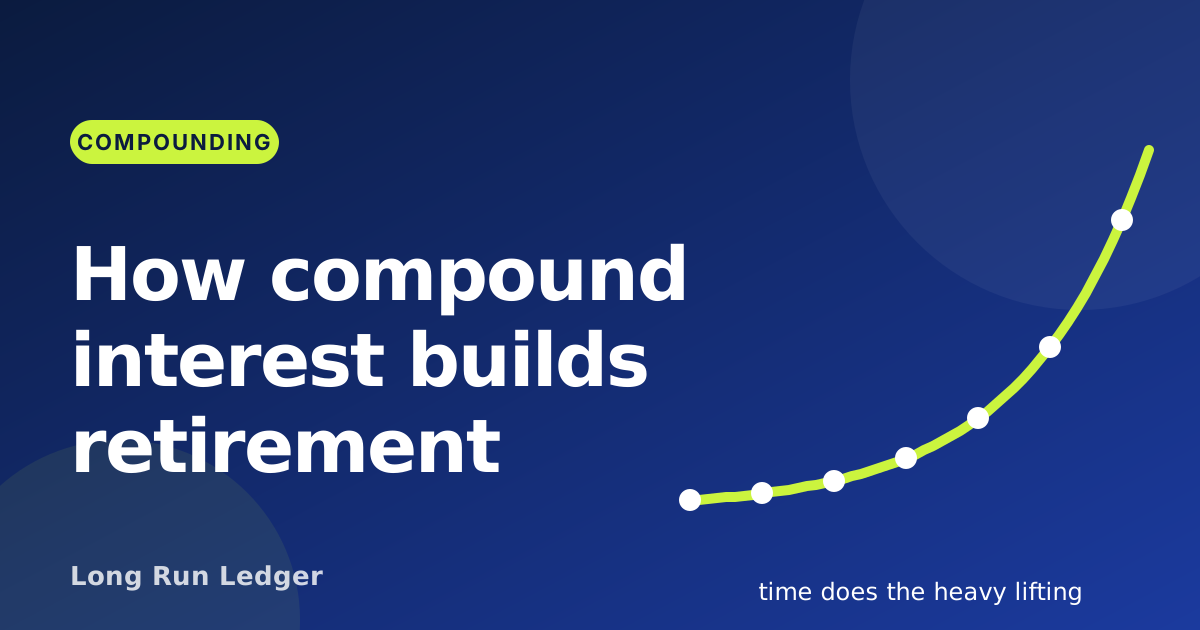 How Compound Interest Builds Retirement Savings (With Real Numbers)Compound interest turns steady saving into large balances over decades. See $500 a month at 7% over 10 to 40 years, and the cost of waiting.Read guide
 Lean, Regular and Fat FIRE: What Each Style CostsLean, regular and fat FIRE differ by yearly spending. See the portfolio each one needs at a 4% withdrawal rate, and what to weigh before choosing.Read guide
 How to Open a Roth IRA: Step by Step for BeginnersOpen a Roth IRA in about 15 minutes: check eligibility, pick a provider, fund it, and invest. Includes the 2026 limit and the deadline.Read guide
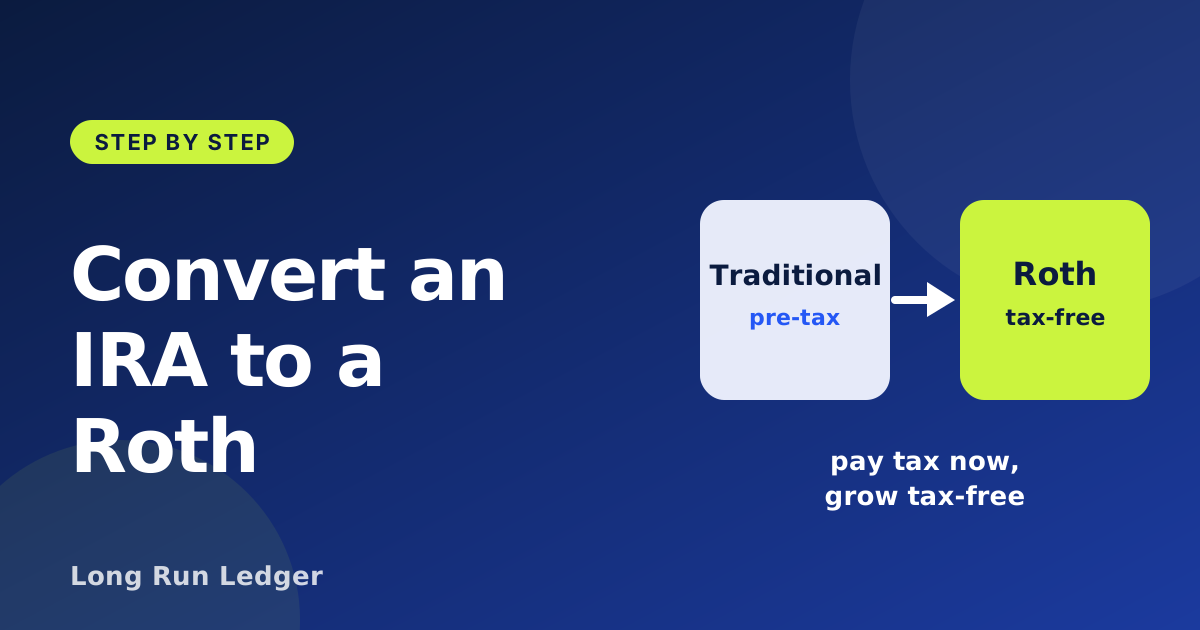 How to Convert a Traditional IRA to a Roth IRA, Step by StepHow to convert a traditional IRA to a Roth IRA: the steps, the tax bill, the pro-rata rule, the December 31 deadline and common mistakes.Read guide
 Roth vs. Traditional 401(k): How to ChooseRoth or traditional 401(k)? The choice comes down to your tax rate now versus in retirement. See the 2026 limits, an example, and a simple rule.Read guide
 Barista FIRE: What It Is and How to Calculate Your NumberBarista FIRE lets part-time income cover part of your spending so you need a smaller portfolio. See the formula, an example, and the risks.Read guide
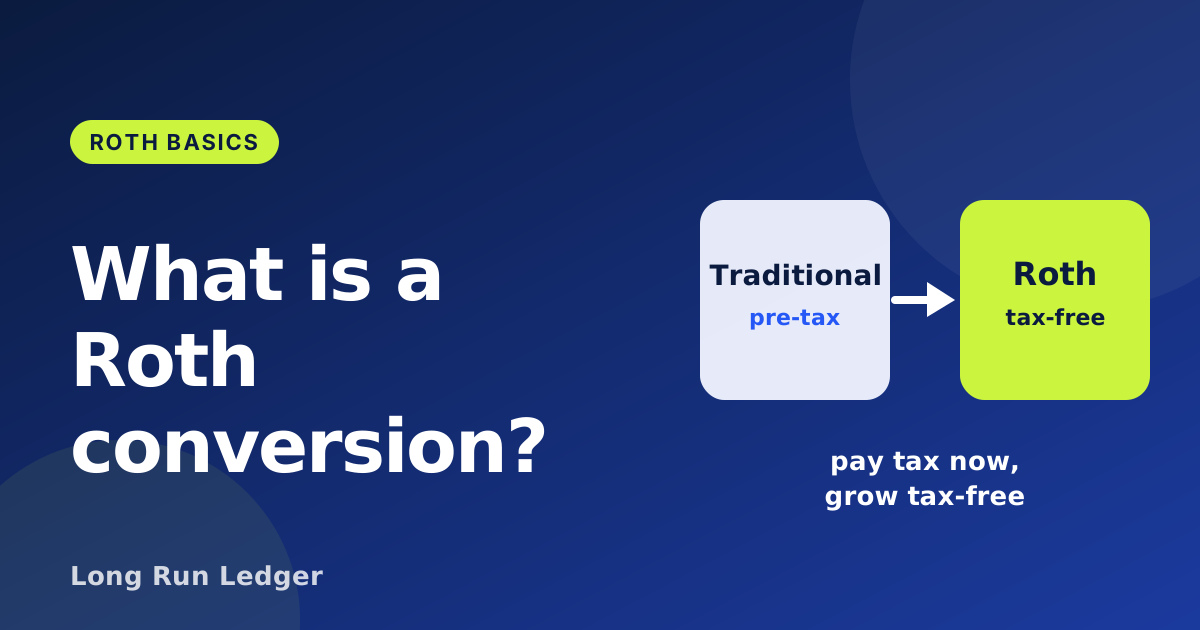 What Is a Roth Conversion? How It Works and What It CostsA Roth conversion moves pre-tax retirement money into a Roth IRA. Learn how it’s taxed, see a worked example, and find out when converting makes sense.Read guide
 Roth IRA Contribution Limits for 2026 and 2027The Roth IRA limit is $7,500 for 2026 ($8,600 if 50+). See the 2026 and 2027 income limits, how the phase-out works, and a worked example.Read guide
 Backdoor Roth IRA: Step-by-Step Guide and the Pro-Rata RuleA backdoor Roth lets high earners fund a Roth IRA. Learn the steps, the pro-rata rule with a worked example, and the mistakes to avoid.Read guide
 Coast FIRE Number: What It Is and How to Calculate YoursLearn what a Coast FIRE number is, the formula behind it, and two worked examples, plus what the math leaves out.Read guide